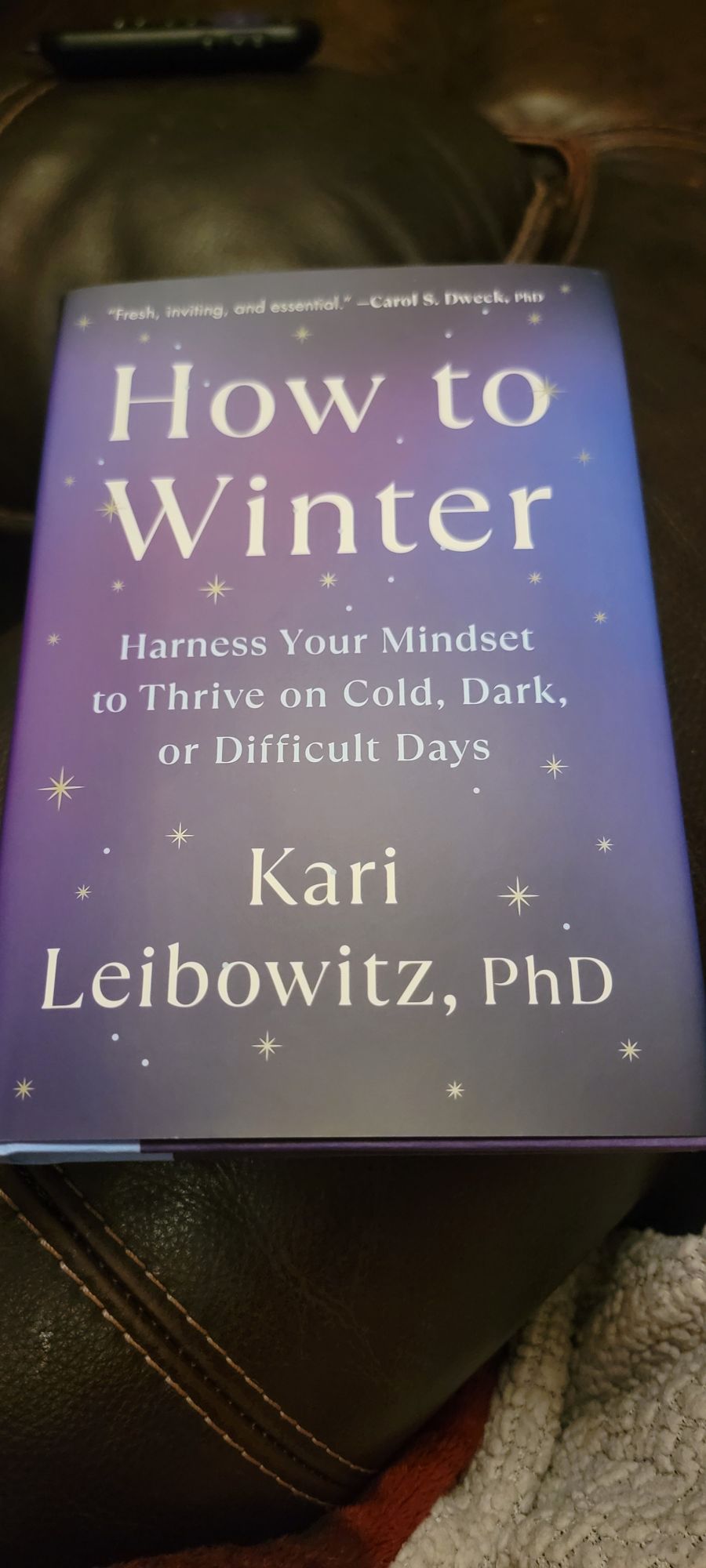
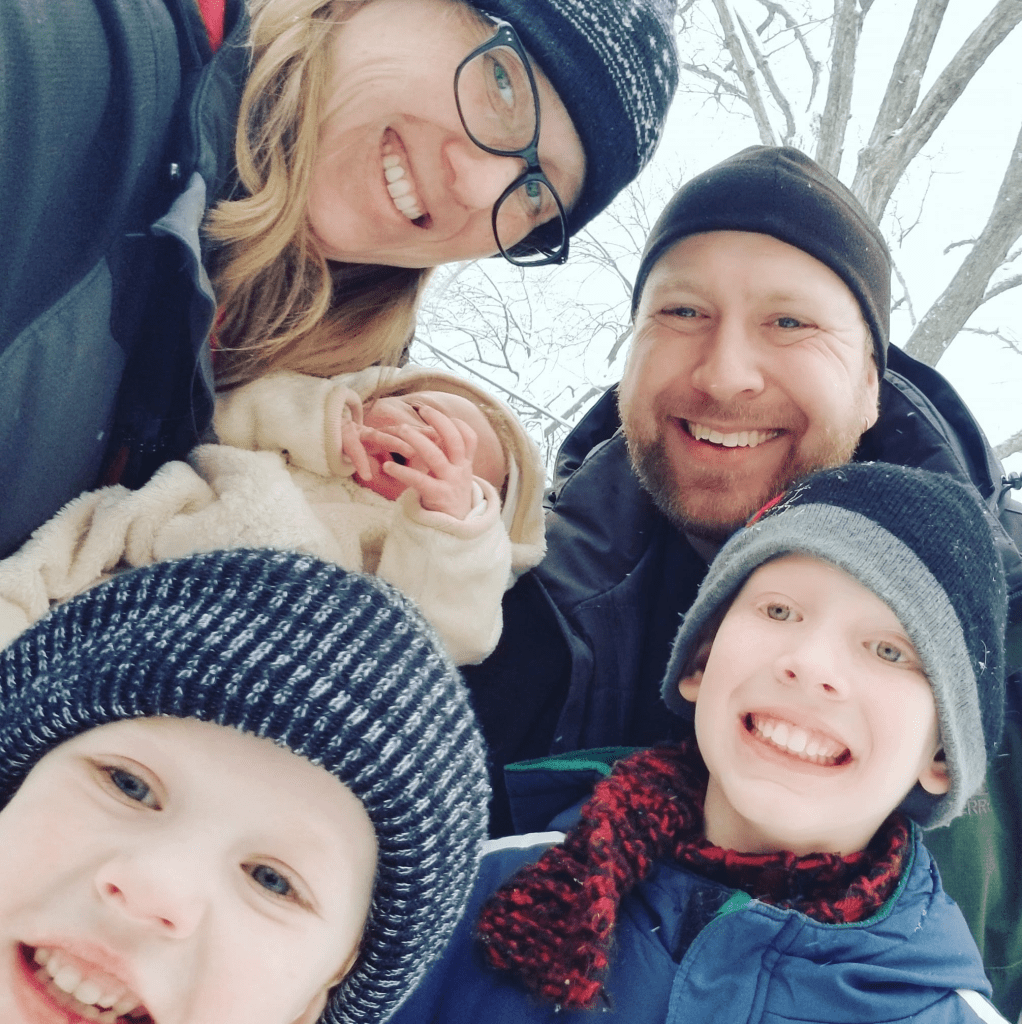
Some books find you at exactly the right time, and How to Winter by Kari Leibowitz was one of those books for me. The choice to read this was inspired by Louisiana getting hammered with eight inches of snow in late January 2025. Yes, you read that right. Our warm, humid, crawfish-boiling state was suddenly a frozen tundra, and while we know how to handle just about anything, this was a rare kind of challenge. We had snow bibs and pants for the majority of the family (huzzah rediscovered in the deep depths of the closet). We have had some experience with the weather having moved to the south from the north. Cue my curiosity about winter mindset, which led me to How to Winter by Kari Leibowitz.
TL;DR? Read. This. Book.
Seriously. Even if you only experience winter once every couple of years (or if you just want to romanticize that one cold front that makes you break out the hoodies). Read this book. It is soooo good.
My Reading Experience
I picked this up in late February and finished it by mid-March, thanks to a solid four-hour reading session at my kid’s birthday party. He was living his best 15-year-old life, being effortlessly cool with his friends, and I got to immerse myself in a book without being on snack duty. Independence is cool.

I also found myself bringing this book everywhere. If I knew I’d be waiting somewhere, it came with me. Making reading a priority felt good—like a small act of self-care, a way to sometimes quiet the anxious noise in my head.
Breaking Down the Inspiration
There were so many passages in this book that made me stop, reread, and let them sink in. Here are a few that really stood out:
- “…How we approach winter is a pretty good litmus test for how we approach other dark, difficult situations in our lives. How do we respond to situations out of our control? How do we react to circumstances we did not choose? Do we shrink and wither, or do we turn inward with intention and cultivate moments of joy? Do we focus on frustration, or do we seek wonder and connection to get us through? And, most important, which mindsets are motivating us, consciously or unconsciously? Are our mindsets holding us back or propelling us forward? Winter isn’t just a season in nature. Winters – a time of challenge, struggle, or grief – can come into our communities, our homes, and our lives in unexpected ways and at unexpected times. …the same practices that help us embrace and enjoy winter can also help us through difficult seasons of life.”
- Everything has its season, everything has its time. Sometimes it’s darkest before the dawn. What if it is our mindset that allows us to experience life?
- Everything has its season, everything has its time. Sometimes it’s darkest before the dawn. What if it is our mindset that allows us to experience life?
- “‘Plants and animals don’t fight the winter; they don’t pretend it’s not happening and attempt to carry on the same lives that they lived over the summer. They prepare. They adapt. They perform extraordinary acts of metamorphosis to get them through. But that’s where the transformation occurs. Once we stop wishing it were summer, winter can be a glorious season in which the world takes on a sparse beauty and even the pavements sparkle. It’s time for reflection and recuperation, for slow replenishment, for putting your house in order.’ Like these plants and animals, we can appreciate this ‘glorious season’ for being the time of year in which we get to do less.”
- We pride ourselves in being busy but do we also pride ourselves for self-care? Oftentimes, we place ourselves on the backburner and work tirelessly to accomplish whatever tasks we are faced with.
- We pride ourselves in being busy but do we also pride ourselves for self-care? Oftentimes, we place ourselves on the backburner and work tirelessly to accomplish whatever tasks we are faced with.
- “One of the most inspiring proponents of rest is Tricia Hersey, the founder of an organization called The Nap Ministry. Hersey preaches the gospel of rest, and her book Rest is Resistance details how ‘rest is about much more than naps.’ In her words, rest is a powerful tool for dismantling capitalism and white supremacy. This work is based on the historical legacy of the US, founded on slavery, in which her ancestors were never allowed to rest. That history has led to a system today that affords many people too few sick days, not enough vacation, and little opportunity for leisure. This has led to a culture of overwork, burnout, and normalized exhaustion, because there is always more money to be made, another side hustle to start, another hour to be productive, and the chance that falling behind could have disastrous consequences. For Hersey, resting is a way to push back against the unceasing demand to do more, where in particular, those with less – especially black and brown people who have historically been systemically excluded from opportunities – have to work longer hours for less pay to get by. In this context, in this culture, to rest is to resist these structures.”
- To learn more about The Nap Ministry, click here.
- To learn more about The Nap Ministry, click here.
- “How we attend to things shapes our existence. Our attention is a powerful tool, and it plays a tremendous role in our everyday experience. What we attend to becomes what we see, and what we see becomes what we engage with, and what we engage with becomes our life.”
- As someone who usually meets cold weather with resistance (and maybe some light complaining), this perspective shift hit me. What if we didn’t just brace for winter but leaned into it? This applies to more than just the seasons—how often do we grit our teeth through challenges instead of finding the good in them?
- As someone who usually meets cold weather with resistance (and maybe some light complaining), this perspective shift hit me. What if we didn’t just brace for winter but leaned into it? This applies to more than just the seasons—how often do we grit our teeth through challenges instead of finding the good in them?
- “This winter-bashing creates – and reinforces – our mindset about winter. Words are powerful, and saying something out loud makes it real. Our words direct our and others’ attention, and we saw in the last chapter how nearly attending to something shapes our experience. When we repeat something over and over – whether it’s complaining about winter weather or criticizing ourselves – we etch the lines of our reality deeper with each repetition. The language we use shapes how we understand and perceive the world around us.”
- This one made me think about how we approach any tough season in life. It’s easy to focus on the discomfort, but what happens if we reframe it? Instead of seeing something as miserable, we can view it as an opportunity to slow down, reflect, or even try something new.
- We create and project the world around us with our thoughts—and shocker—others do the same. Everyone is shaping their own reality, and how we interact with that reality matters.
- Leibowitz goes on – this part of the book got me. If you know anything about TheTravelingWithers.com and Ross Wither’s Uveal Melanoma journey, you know why. “The causality of the language-cognition relationship goes both ways: how we think influences how we speak, but research is piling up to support the idea that how we speak influences our thoughts. As Lena Boroditsky writes, ‘Changing how people talk changes how they think.’ By deliberately shifting the words we use, we can change our mindsets: in one study, cancer patients who were shown videos of researchers, doctors, and cancer survivors describing the cancer journey as manageable or even an opportunity to make positive life changes were less bothered by physical symptoms, engaged in more adaptive coping mechanisms, and had reduced distress and symptoms during treatment. In another randomized controlled study, I was part of Stanford, describing minor, not-dangerous, side effects of treatment for life-threating food allergies as a positive sign that the treatment was working led to significantly reduced patient worry when they had symptoms, decreased symptoms as treatment progressed, and an increased biomarker of treatment efficacy.”
- So, thinking about cancer, disease, and ailments in a positive way, manageable or an opportunity to make life changes, reduces distress and worry, even thinking positively can reduce symptoms! In no way am I saying positive thinking should be a substitute for treatment from a medical professional – all I am saying is that if you are interested in the slightest, more information can be found here.
- This part of the book was really so very very good. Here’s another quote from this section: “Changing your language transforms your experience of the season; observe how finding nice things to say focuses your attention differently, and how speaking something aloud helps you notice it more in the future. As you work on your winter words, you might start asking yourself: How would your life be different if you committed to speaking more positively about other things? How would your attitude change if you spoke lovingly of yourself, your appearance, your body, or your abilities? How might your relationships change if you refused to badmouth your partner, your parents, your friends? How might you experience your home, job, community differently if you constantly made chitchat about things you appreciate in your house, your work, your town? How can we navigate the real challenges we face with ourselves, in our relationships, or when it gets cold and dark in a way that doesn’t involve relentless criticism? Our words direct our and others’ attention: What if we took that power seriously and vowed to start directing attention where we actually wanted it to go?”
- “Taking inspiration from the Norwegian practice of friluftsliv, we can strive to incorporate time outdoors into our daily life regardless of the weather or season. Three especially useful strategies can help:
a. Focus on short-term rewards
b. Practice wise self-compassion to notice patterns.
c. Leverage social support.
These strategies all draw on the science of motivation to propel us out of our winter burrows and into the great outdoors, and help us cultivate the mindset that winter is wonderful by connecting us to more opportunities for winter recreation.” - The rest of the book was incredible. “It’s about the right things in the right places.” “take individual actions to embrace winter.” “If mindset is the seed, then the cultural context – infrastructure included – is the soil.” Leibowitz did just a wonderful job of laying the groundwork for the incredible work we are called to do in our own lives. Changing mindsets shifts culture. We need to “embrace imperfect advocacy.” “We don’t have to be perfect, or perfectly consistent, to be part of the movement…”

Final Thoughts
This book wasn’t just about winter; it was about life. It gave me a fresh perspective, some much-needed reflection, and maybe—just maybe—a little more appreciation for colder days. If you’ve ever found yourself dreading the shift in seasons (or any difficult season in life), How to Winter offers a mindset reset that is so worth the read.
So, grab a blanket, a warm drink, and give this one a go. Even if winter is a once-in-a-blue-moon event for you, the wisdom inside is timeless.
 MegannWither.com
Leave a comment